October 14, 2026 · Coreventra
Booking System vs Phone Bookings: What Windsor Small Businesses Gain
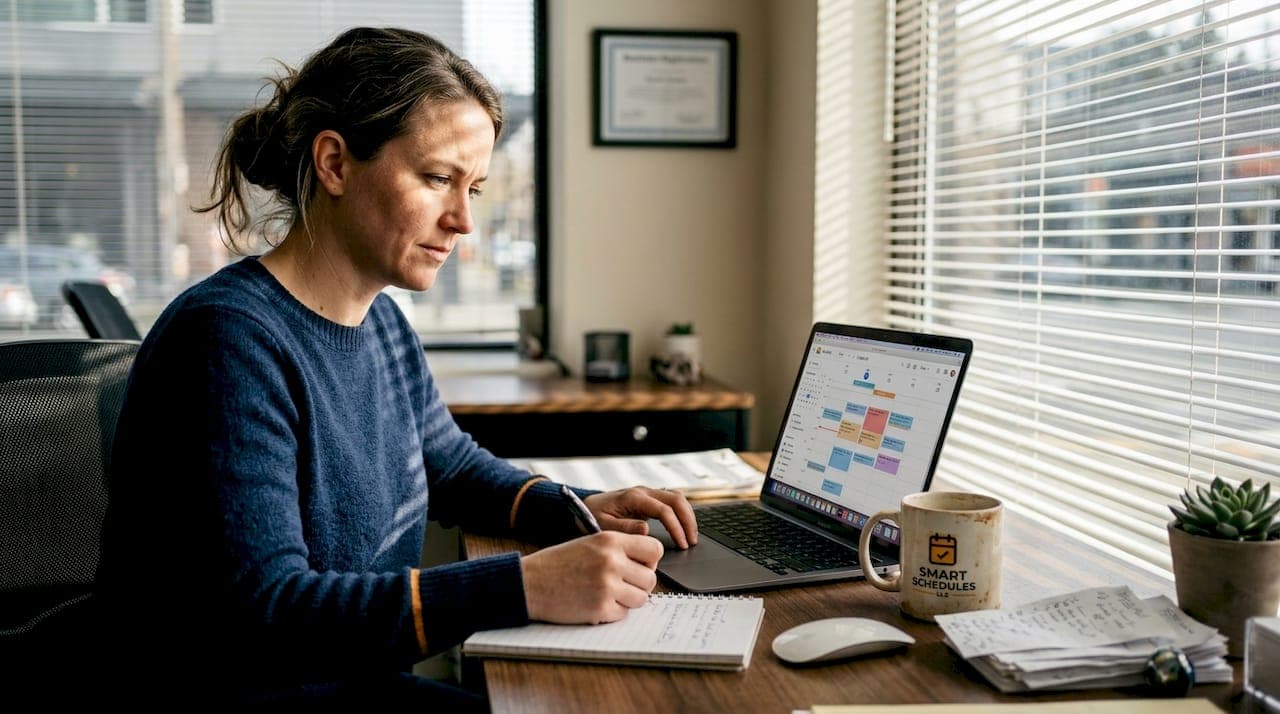
Illustrative photo.
It is 7:40 on a Tuesday evening in Windsor. Someone who just found your business online is staring at your phone number, deciding whether to call. They are a first-time customer, a little unsure, and they do not really feel like talking to anyone. They close the tab and book with the competitor who has an online booking button instead.
This is the choice every appointment-based small business faces: take bookings by phone, or add an online booking system. Both put names in the book, but they differ in cost, customer experience, and how much of your week they quietly consume. Here is an honest comparison of the two, including the cases where the phone still wins, so you can decide what fits your business.
The cost of a phone booking is staff time
An online booking system comes with a clearly stated monthly fee, which makes it easy to compare. A phone booking has no invoice, but it still costs you. Every call takes a few minutes of staff time: answering, checking availability, taking details, confirming. Multiply that by dozens of calls a week and the phone becomes a part-time job. Calls also interrupt real work. A stylist mid-cut or a technician under a sink has to stop, and every interruption costs focus and flow. When you price your time honestly, the phone is rarely the cheap option it looks like.
When nobody answers, the booking goes elsewhere
Phone bookings only happen when someone is free to answer. Calls arrive during the lunch rush, after closing, on weekends, and while your one staff member is already on another call. Voicemail catches some of these, but plenty of callers never leave a message; they simply try the next business on their list. An online booking system accepts bookings around the clock, including the evening hours when many people finally sit down to sort out their personal admin. The question is not whether your business is open at 10 p.m. It is whether your competitors are accepting bookings at 10 p.m.
No-shows are a process problem, not a people problem
Missed appointments leave gaps in the day that are hard to refill. The most effective fix is not stricter policies; it is reminders. A confirmation when the booking is made, a reminder the day before, and sometimes a same-day nudge. Online booking systems send these automatically by text or email, and many let customers reschedule themselves when plans change, which turns a no-show into a moved booking. You can do the same thing by phone, but only by spending staff time on reminder calls every day. Most small businesses start with the intention of doing this and quietly stop. Automation is what makes it actually happen.
What customers actually prefer
Here is where the comparison gets honest. A meaningful share of customers prefer to book online without talking to anyone, especially younger customers and first-time visitors who have no relationship with your business yet. For them, a phone-only business feels like friction. But plenty of customers still prefer to call, particularly older clients, people with complicated requests, and anyone who wants reassurance before committing. The risk is not picking the wrong channel. The risk is forcing every customer through the one channel they dislike most.
The cost comparison, side by side
Off-the-shelf online booking tools typically range from roughly $15 to $60 CAD per month for a small business, with fuller plans that add staff calendars, integrations, and marketing features costing more. A custom-built booking system is a larger one-time investment, but you own it outright, it fits your exact workflow, and there is no per-user fee as you grow. Against that, weigh the true cost of the phone: staff time on every call, the cost of a second line or an answering service if you have one, and the quieter cost of missed calls and unfilled slots. For many appointment-based businesses, the monthly software cost works out to less than the revenue from one or two recovered bookings. Run the numbers against your own booking volume and average appointment value before you decide.
When phone-first still wins
None of this means every business should go online-only. Phone-first still makes sense when appointments need a real conversation: consultations where you have to qualify the customer, jobs that need an estimate before a time can be confirmed, and client bases that genuinely prefer to talk. Some high-trust services keep the phone front and centre because the call itself is part of the experience. And if your schedule is mostly regulars booking the same slot with the same person, a phone and a paper diary can genuinely be enough.
The middle ground most businesses land on
Most Windsor small businesses do not need to pick a winner. The practical answer is a hybrid: online booking for the customers who want it, with the phone number still prominent for everyone else. The booking page can live on your website, in your Google Business Profile, and on social media, capturing after-hours and first-time customers while your regulars keep calling like they always have. For a fuller picture of what the online side includes, read our guide on booking system features that pay off for Windsor small businesses. And if off-the-shelf tools cannot handle your scheduling rules, such as multiple staff with different services, resources that cannot be double-booked, or pricing that depends on the job, software built specifically for your business may be the better fit. That is the kind of thing we build as custom web applications: systems shaped around how your business actually runs, not generic tools you have to work around.
How much does a booking system cost for a small business in Windsor?
Off-the-shelf scheduling tools typically run about $15 to $60 CAD per month, depending on staff count and features. A custom-built booking system costs more up front but removes the subscription and can be shaped to your exact workflow. The honest answer depends on your booking volume, how many staff need calendars, and which integrations you need.
Will an online booking system reduce no-shows?
Automatic reminders and easy self-rescheduling are the main reasons many businesses see fewer no-shows after adding online booking. The software does not change customer behaviour on its own; it works because reminders go out consistently, which is the part manual processes rarely sustain.
Do I have to stop taking phone bookings if I add online booking?
No. Most small businesses run both. Online booking handles the customers who prefer it, including evenings and weekends, while the phone stays available for regulars, complicated requests, and anyone who wants to talk. The two channels cover each other's gaps.
Is online booking worth it if most of my customers are regulars?
It depends on how much admin the phone creates for you. Regulars who always book the same slot may keep calling, and that is fine. Online booking earns its keep with new customers, after-hours bookings, and cutting the daily work of confirmations, changes, and reminders. If the phone creates almost no admin burden for you today, you may genuinely not need it yet.
Still weighing it up? The right choice depends on your booking volume, your customers, and how much of your week you want back. Get a free quote and we will talk through what makes sense for your business, with no pressure either way.