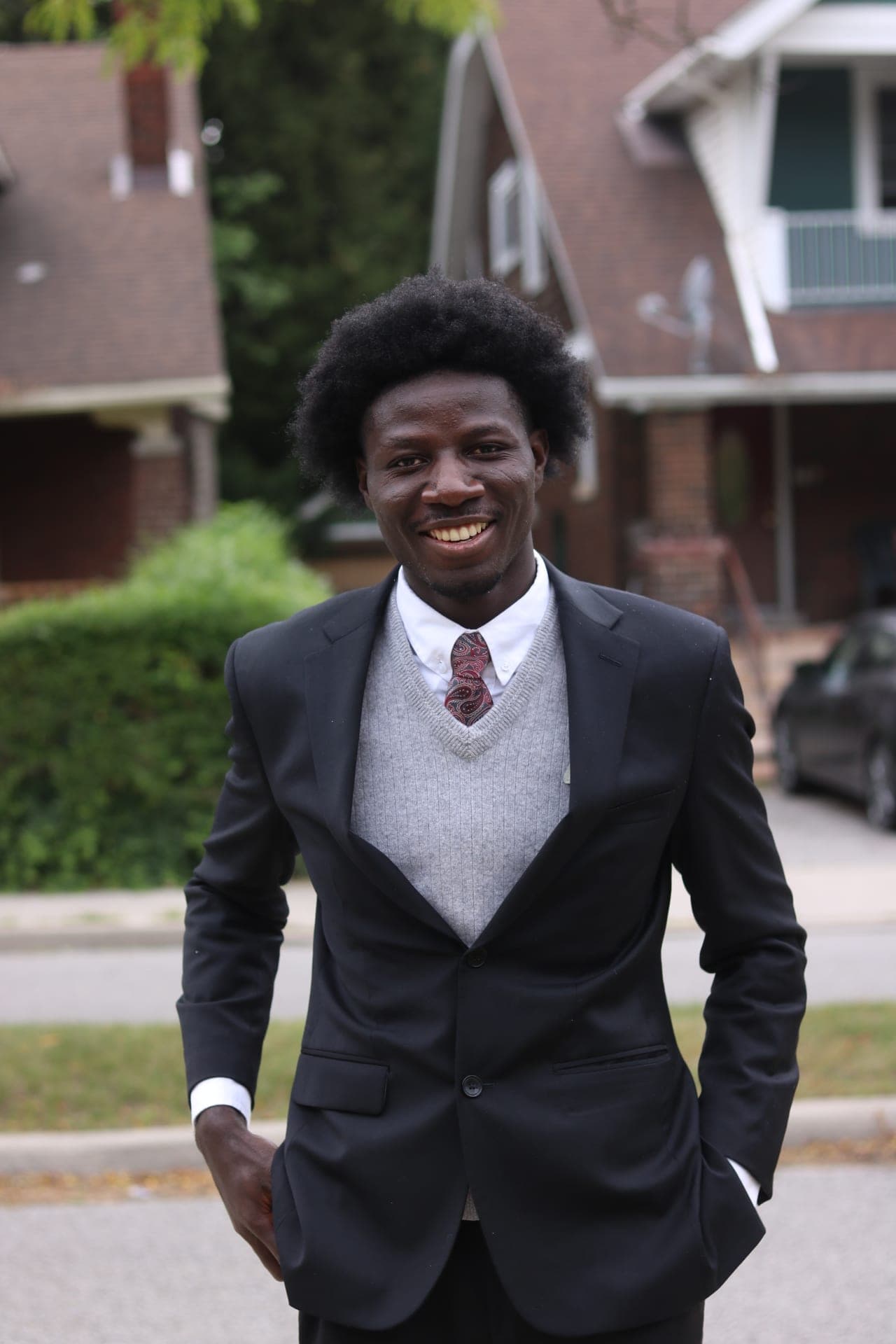
I've been curious about how computers actually work since I was a kid. Not just using them, but wanting to understand what was happening underneath the screen. That curiosity sat alongside a more specific, more stubborn idea I carried for a long time: at some point I wanted to bring medicine and technology together in something I actually built, not just admire the idea of it from a distance.
Here's how I actually got from that idea to founding Coreventra. It's not the version that starts with a computer science degree and a straight line to a software career. It runs through a hospital in Ghana before it ever touches a codebase, and it's still in progress rather than a tidy, finished story.
Healthcare came first
The interest in computers never went away, but healthcare is where my real, structured training started. From March 2021 to February 2022, I worked as a Medical Office Assistant at Cape Coast Teaching Hospital, conducting patient assessments, helping create treatment plans, assisting in surgeries, handling emergency care, and educating patients on prevention and chronic illness management. I also kept patient records, took part in public health outreach, and mentored medical students during their clinical rotations.
From August 2022 to August 2023, I moved into a Medical Physician Assistant role at University of Cape Coast Hospital, providing patient care under physician supervision, handling emergency cases, managing inpatient treatment, and assisting in surgeries directly. Part of that role involved educating patients and their families, contributing to the training of medical students, and supporting evidence-based practice rather than just following protocol by habit.
From January 2022 through October 2023, overlapping both hospital roles, I was also working remotely as a Customer Service Representative for Jesman Creative, on-call, from Ghana. Clinical training doesn't pay the bills on its own, and juggling a remote customer-facing job alongside hospital shifts was just the practical reality of that period. It was also an early lesson in the kind of context-switching that running a small agency now requires constantly.
None of the clinical work was a detour from something else. It was real, demanding, hands-on training in outpatient, emergency, and inpatient settings, with real patients and real stakes. I learned how to do a thorough assessment instead of a rushed one, make a fast decision without the luxury of gathering more information first, and explain something serious to a person who's scared, in language they could actually use. Mentoring medical students during rotations meant being able to teach that reasoning out loud, not just perform it correctly. Those aren't skills I'd claim translate one-to-one into software engineering. But the discipline underneath them, working the problem methodically, communicating clearly under pressure, teaching what you know instead of just doing it, is the same discipline applied somewhere else now.
Where the shift actually started
The pull toward computers never left, even while healthcare was the main thing I was doing. At some point I stopped treating it as a background interest and enrolled in a certificate program at the University of Ghana: Web Programming and Hardware Repairs. It wasn't a hobby project or a weekend course I did casually. It was my first formal, structured step into the technical side of things, learning how the systems I'd been curious about since I was a kid actually get built, wired, and kept running.
That program covered real fundamentals: how a website actually gets built and served, not just what one looks like from the outside, and how hardware fails and gets diagnosed and repaired, not just replaced. Hardware repair in particular teaches a specific kind of patience. You can't guess your way to a fixed motherboard; you have to isolate the actual failure, test one hypothesis at a time, and rule things out methodically instead of swapping parts until something happens to work. That habit has stayed with me directly. It's close to identical to how I debug a production issue now.
Pairing web programming with hardware repair in one certificate was, in hindsight, a genuinely useful combination. One side teaches you how software actually gets delivered to a real user; the other teaches you what happens when the physical machine underneath any of that stops cooperating. Having both early meant I never thought about software as something that exists independently of the real, fallible hardware running it.
It also confirmed something I'd suspected for a while: the interest in computers wasn't going to stay a background hobby. I wanted to go further than a certificate could take me, which meant leaving something familiar again. This time, it meant leaving Ghana.
Studying software engineering in Canada
I moved to Canada to study computer science, and I'm currently pursuing a Bachelor's degree with Honours in Software Engineering. That's also, plainly, why Coreventra is based in Windsor-Essex, Ontario rather than anywhere else. It's a different kind of learning than the certificate program: less about fixing a specific machine in front of you, more about the underlying theory of how systems are designed, how software scales, and how to reason about a problem before writing a line of code toward solving it. It's the same theoretical grounding that sits underneath the API integrations and workflow automation Coreventra actually builds for clients.
It's also a restart. Moving countries to begin a new degree program means starting over in a lot of small, unglamorous ways: a new education system, new academic expectations, building a technical foundation from a different starting point than most of my classmates, most of whom didn't spend the years before university doing hospital shifts. The degree is still in progress. I haven't finished it, and I'm not going to describe it as something already wrapped up when it isn't.
What I can say is that the combination is unusual on purpose, not by accident: hands-on certificate training in web programming and hardware, a real clinical background that runs on methodical assessment and clear communication, and a formal software engineering education layered on top of both. That's the actual foundation Coreventra is built on.
Founding Coreventra
Coreventra is where all of that gets applied to real client work. I founded it in 2025 as a solo-led company based in Windsor-Essex, Ontario, and I built the first two projects described below myself, before anyone else was involved. It hasn't stayed solo. Real engineers have since joined, including the people pictured later in this post representing Coreventra in person at real Windsor-Essex markets.
It's also running at the same time as the degree, the same balancing act as the hospital shifts and remote job earlier. A software engineering program doesn't pause because a client has a real deadline, and a client's deadline doesn't move because there's an assignment due the same week.
The scope of what Coreventra does breaks down into a few concrete areas, and I want to walk through what each one actually means in practice rather than list them as buzzwords.
Website development is the most straightforward of them: business websites, service websites, landing pages, booking websites, portfolio sites, and corporate sites, built responsive and connected to whatever forms or integrations the business actually needs. It's the entry point for most client relationships, and it's also where the clinical assessment habit shows up first. Before I design anything, I want to understand what the site actually has to do for the business, not just what it should look like.
E-commerce goes further than a template store: product catalogs and variants, a real shopping cart and checkout flow, mobile-first store design, and actual payment integration. All Seasons Caribbean, one of the two real projects below, is a direct example of this: heat-level and size variants, working payment, and shipping logic that had to reflect how a real spice brand actually ships product, not a generic default.
Custom web applications are for businesses that need more than a website: a real tool built around a specific process. That covers customer portals, internal dashboards that give an owner real visibility into their business day to day, booking and management systems built around a specific workflow instead of a generic plugin, and API integrations that connect systems that otherwise wouldn't talk to each other. This is the category Traders Core falls into, and it's the closest thing to the full-stack engineering work my Software Engineering coursework is actually training me for.
AI and automation is practical, not decorative: AI-handled customer support that actually resolves questions instead of deflecting them, document processing that removes manual data entry, automated lead follow-up so a real inquiry doesn't sit unanswered, and workflow automation that removes repetitive manual steps. The automation logic behind Traders Core's trading platform lives in this category too, even though the project itself is filed under custom application work.
SEO and digital growth covers on-page and technical SEO, keyword research, content strategy, local SEO, and Google Business Profile optimization: work that improves how findable a business is, not a promise of a specific ranking. All Seasons Caribbean needed this groundwork alongside the store build itself.
And after launch, there's maintenance: hosting, updates, security patches, content changes, technical support, and ongoing improvements. This is the part a lot of smaller shops quietly drop once the invoice is paid. I don't, because a site breaking six months after launch with no one to call is an outcome I'd want to avoid if I were the one paying for it.
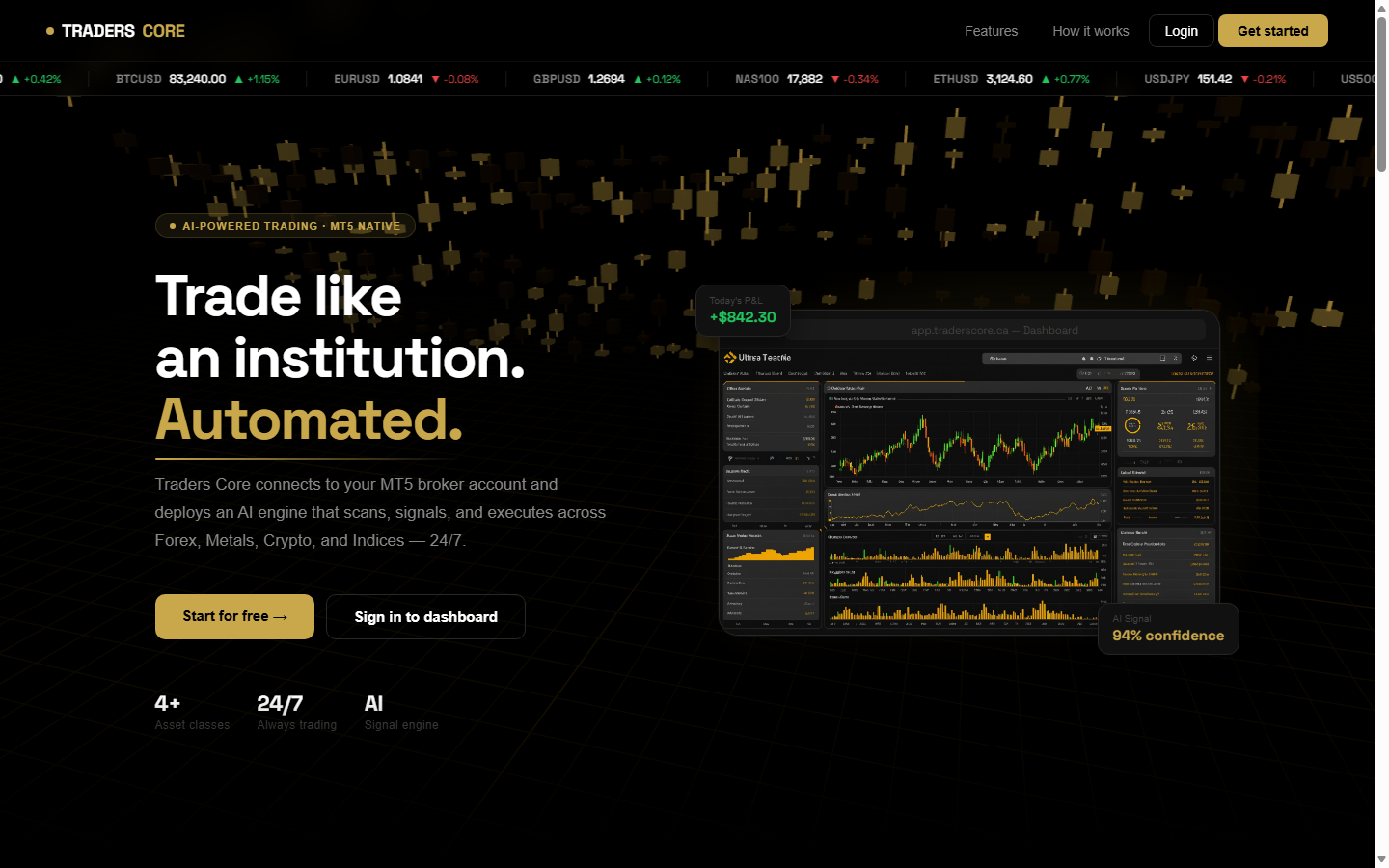
The clearest example of what that actually looks like in practice is Traders Core, an AI-powered MT5 trading automation platform. The client needed a fully custom, end-to-end trading application, not a marketing site but the real product itself, and off-the-shelf tools couldn't support it. I built the full stack: the customer-facing frontend and homepage, the backend and database, the MT5 trading automation logic, authentication, the APIs, and the operating dashboard, shipped as one working system rather than stitched together from templates. It's live and operating as a functioning product today.
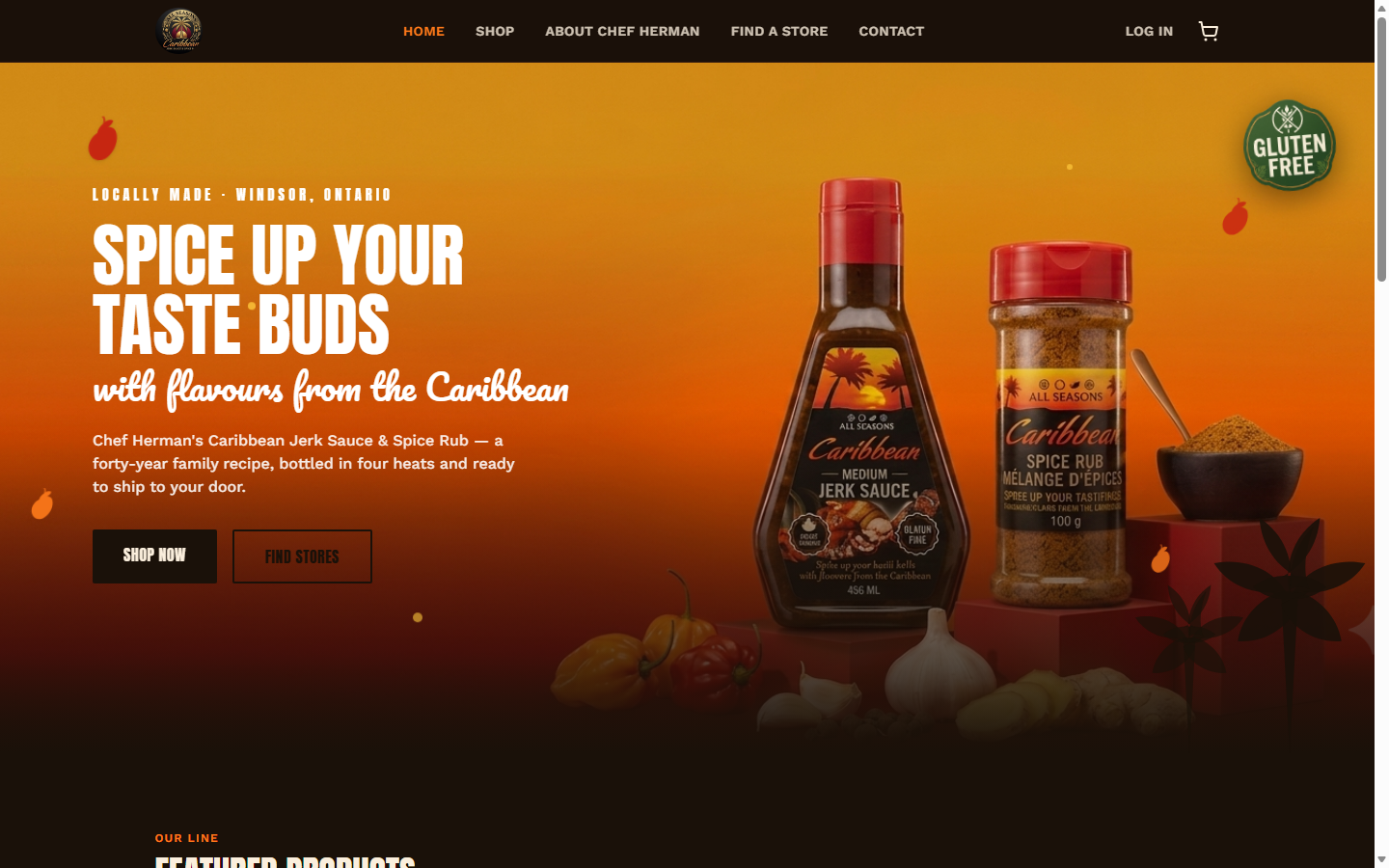
The other real project is All Seasons Caribbean, a full e-commerce build for a Caribbean jerk sauce and spice-rub brand. The product line needed real e-commerce mechanics: heat-level and size variants, working payment, delivery, pickup, and shipping logic, plus the on-page SEO groundwork to actually be findable once it launched. I designed and built the storefront, the product variants, the payment flow, and the shipping and delivery setup, and I'm still doing ongoing work on pricing, shipping, and presentation post-launch. It's live and operating as a functioning online store, with a real client behind it.
These are the two completed projects on record right now, the same standard already set on our about page: we won't publish results we haven't actually delivered, and we'd rather show real, smaller proof than a page full of claims that don't hold up under a second look.
How a project with me actually runs, stage by stage
It's one thing to say I work methodically. It's more useful to walk through the seven stages a Coreventra engagement actually goes through.
Discover is a short, real conversation about the business, the current site if one exists, and what the client is actually trying to accomplish, not a scripted pitch. This is assessment, in the clinical sense: you find out what's actually going on before you propose anything.
Strategize means that if a client already has a site, I check it for what's measurably costing them visitors (HTTPS, mobile rendering, page weight, load time) and scope a plan around those real findings, not a sales script built to justify a predetermined price. This is the step most agencies skip in favor of jumping straight to a pitch.
Design produces a scoped, itemized proposal with a price the client can see the actual reasoning behind, followed by the visual direction and experience taking shape. No bundled flat fee that hides what's actually being paid for.
Develop happens against the agreed scope and acceptance criteria, with progress the client can actually check in on rather than radio silence until launch day. Anything that comes up outside the original scope gets its own written change order instead of being silently absorbed or silently ignored.
Test means checking the work across real devices and browsers and verifying it against what was actually promised, before a client or their customers ever see it. Shipping untested work because a deadline is close produces the same kind of avoidable mistakes every time.
Launch is exactly what it sounds like: we ship it live and hand it over, not a soft launch that quietly never gets finished.
Support is where care plans, SEO, and other recurring services become available, but only once a client has actually seen the initial work, never sold upfront before there's a real reason to want them. I'd rather earn that ongoing relationship after delivering something real than bundle it into the first invoice on faith.
Being honest about being early
Coreventra is still an early-stage company, and its GoodFirms profile reflects that plainly: a small team, two real portfolio entries, and reviews that will come from real clients as the company grows rather than being manufactured in bulk before launch.
Showing up in person
A lot of small agencies operate entirely online: a website, a contact form, maybe some ads, no physical presence anywhere. That doesn't fit how I work, and the reason traces back to the clinical years: patient care isn't something you do remotely. You show up, in the same room as the person you're helping. That habit didn't disappear when the work changed.
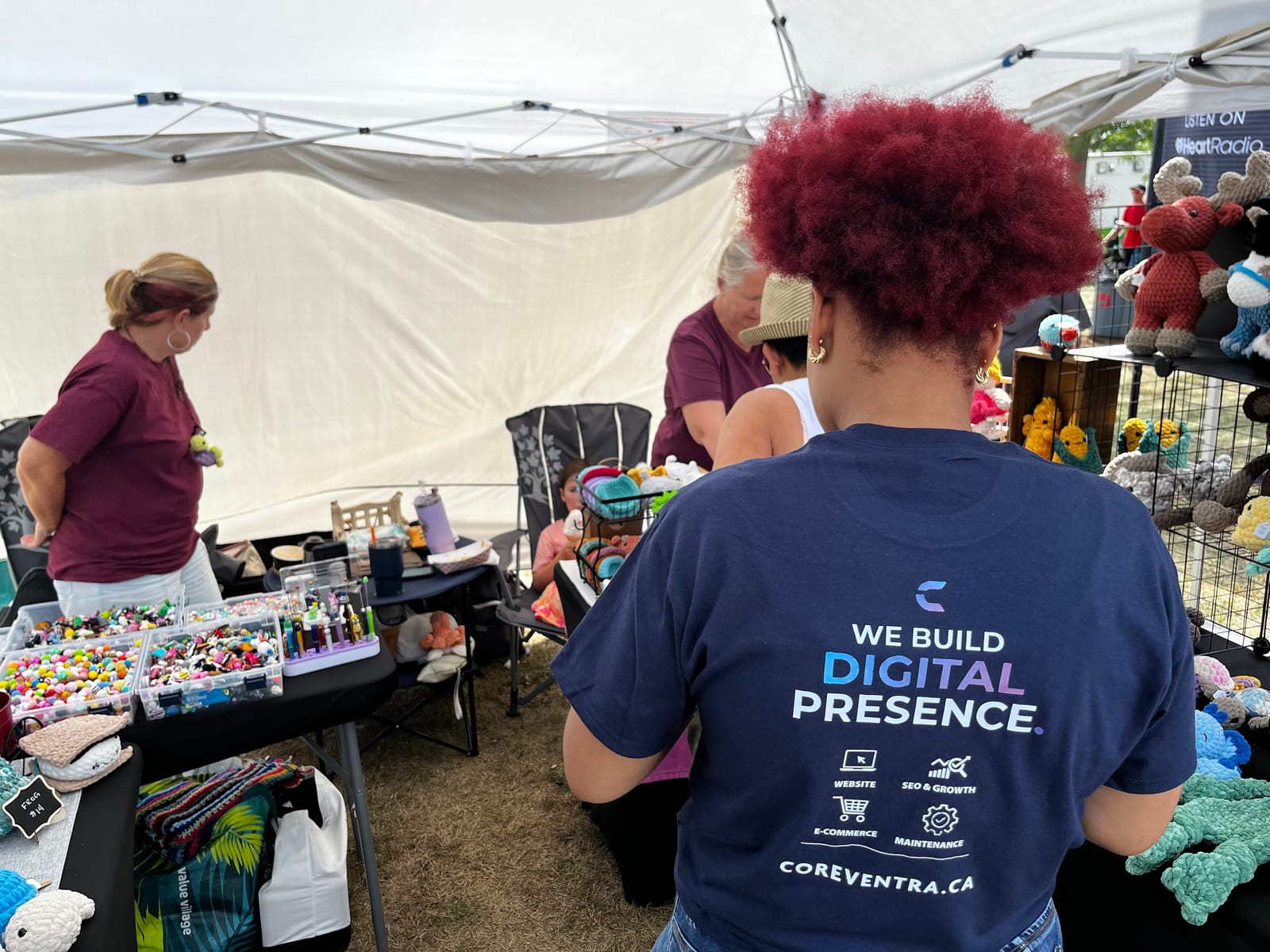
So Coreventra shows up in person: real tables at real local markets and festivals across Windsor-Essex, with real branded shirts on the people representing it. The shirt itself is a plain, honest summary of the actual service scope: Website, E-commerce, SEO & Growth, and Maintenance, under "We Build Digital Presence" and the real coreventra.ca address. Nothing on it is aspirational. It's the same four categories described in detail earlier in this post, just condensed onto a T-shirt instead of a services page.
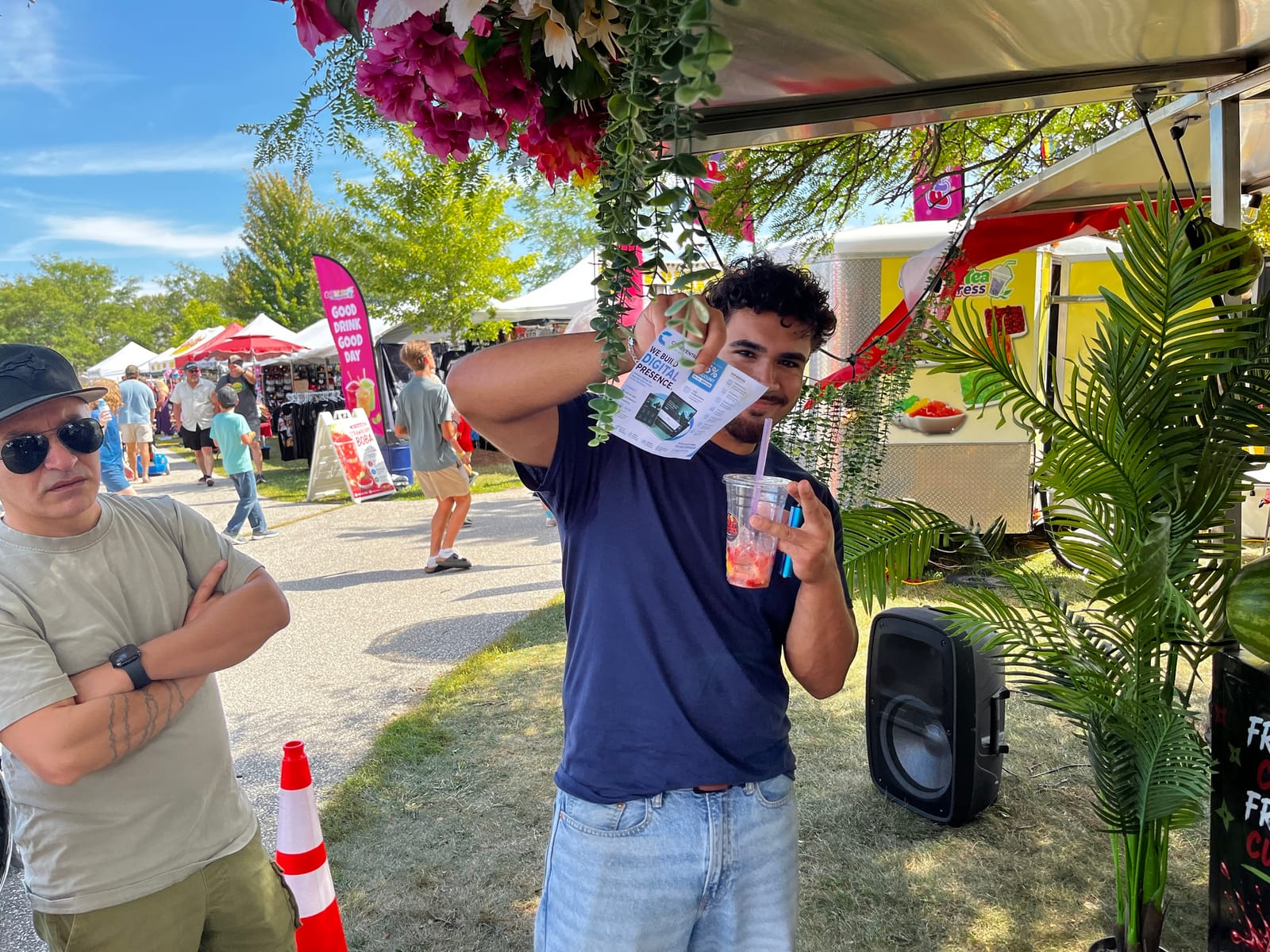
What that actually looks like on the ground is a table under a tent or a stretch of grass at a market, a speaker, real flyers, and conversations with strangers: vendors selling crochet toys and jewelry, food trucks, families walking through on a weekend. Most of those conversations don't turn into a client relationship, and that's fine. It's not so different from the public health outreach I did during clinical rotations: you talk to a lot of people, most of it doesn't turn into anything beyond a shared few minutes, and the value isn't a guaranteed conversion. It's being a real, visible business in the community it actually operates in, not just a domain name.
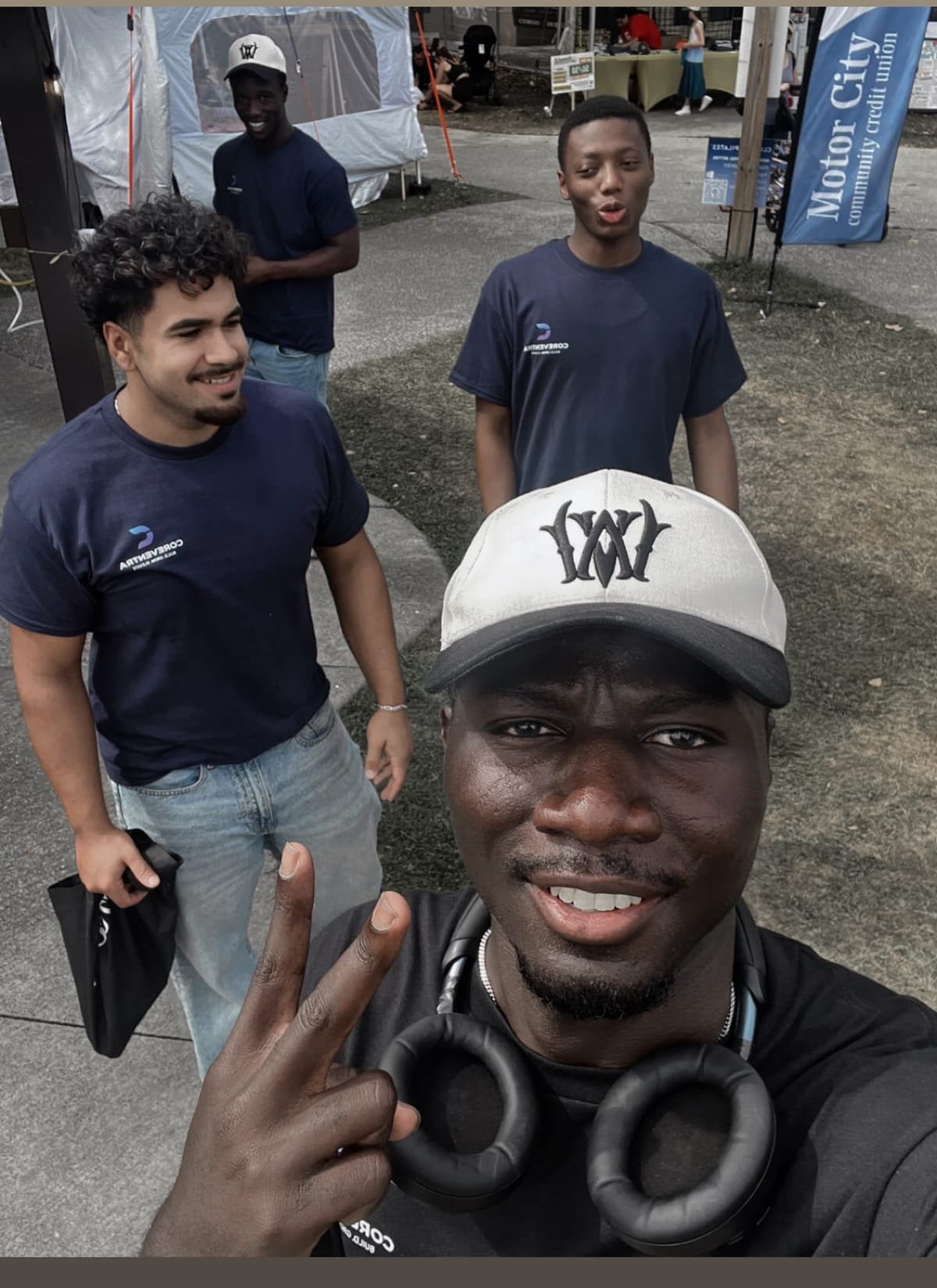
The people in these photos are real Coreventra employees: engineers who've joined since I started this company solo, not stand-ins or hired-for-the-day help. Traders Core and All Seasons Caribbean, the two live projects described earlier, were still solo work. I built both before anyone else was part of Coreventra. What's changed since is real, and this post should reflect that.
What healthcare still shapes today
The mentoring instinct from training medical students during clinical rotations shows up now as a refusal to explain technical work in a way designed to sound more impressive than useful. If a client can't understand what I actually did and why, I haven't finished the job.
The path, laid out plainly
It's a long story told in order, so it's worth laying it out plainly once, without the reflection in between:
Mar 2021 – Feb 2022 · Medical Office Assistant, Cape Coast Teaching Hospital. Patient assessments, treatment plans, assisting in surgeries, emergency care, patient records, public health outreach.
Jan 2022 – Oct 2023 · Customer Service Representative, Jesman Creative (remote). Ran alongside both hospital roles, not a separate career thread: real income while clinical training was the main thing happening.
Aug 2022 – Aug 2023 · Medical Physician Assistant, University of Cape Coast Hospital. Direct patient care under physician supervision, emergency cases, inpatient treatment, assisting in surgeries, training medical students.
Certificate in Web Programming and Hardware Repairs, University of Ghana. The first formal, structured step into the technical side, not a hobby project.
Move to Canada · Bachelor's with Honours in Software Engineering. Still in progress: the deeper theoretical foundation the certificate pointed toward.
2025 · Coreventra founded, Windsor-Essex, Ontario. Solo-led at the start; Traders Core and All Seasons Caribbean were built in this window, before anyone else was involved.
Today · A small real team. Engineers have since joined; the market photos later in this post are them, not stand-ins.
Healthcare and the pull toward computers overlapped for years before the shift became a formal one: certificate first, then degree, then a company built on top of both once there was enough real technical grounding to actually offer client work rather than just study it.
What still hasn't happened
The original goal, actually bridging medicine and technology in something I build, hasn't happened yet. Traders Core is a trading platform. All Seasons Caribbean is an e-commerce store for a spice brand. Neither touches healthcare, and I'm not going to pretend Coreventra has already delivered on that original ambition just because it would make for a tidier story.
It's still a real goal, not an abandoned one. Health-tech is a legitimate direction I want to build toward directly at some point, something informed by actually having worked inside a hospital, not guessed at from the outside the way a lot of health-tech gets built by people who've never done a real patient assessment in their life. But that's a future project, not a current one.
Why I'm telling it this way
It would be simpler to describe myself as a software engineer, full stop, and leave the healthcare years out. A lot of founder bios do exactly that. But this path is the one that actually produced how I work now: methodical, plain about what's finished versus still in progress.
Why this matters if you're deciding whether to work with me
I'm still completing my Software Engineering degree. At the same time, I'm building Coreventra through real client work: Traders Core and All Seasons Caribbean, a documented seven-stage process, and a plain account of what's still in progress rather than rounded up to "done."
If you're comparing digital agencies or freelance developers, I think the honest version of a founder's background is more useful than the polished one, even when it doesn't read as conventionally as a straight computer science track would. You're not hiring a resume. You're hiring the person who's actually going to sit with your problem, and I spent real years learning how to sit with a much higher-stakes version of that same instinct in a hospital before ever touching a line of production code.
What's next
Finishing the Software Engineering degree is the near-term constant everything else fits around. Beyond that: more real client work of the kind Traders Core and All Seasons Caribbean already represent, more real reviews on GoodFirms, and more days like the market appearances pictured above. None of that is a dramatic pivot. It's the same path continuing the same way it's gone so far.
The health-tech goal I mentioned earlier stays on that same list, further out, not abandoned and not rushed forward just to have something bigger to announce. When there's something real to show there, it'll get the same treatment as everything else in this post: described plainly, with the actual state of it stated clearly, not implied to be further along than it is.
If any of this resonates, or you just want to talk about a real project, get in touch directly, or take a look at the real work this whole path has actually produced so far. I'll keep this page updated honestly as more of it gets built, including, eventually, the part of the goal that still hasn't happened yet.